
Next case study
Central Quay Student Accommodation
View case study
You are using an outdated browser. Please upgrade your browser to improve your experience.
Cairnhill delivered the design, fabrication, and installation of a complex 26-tonne signal gantry at Glasgow Queen Street Station during a 20-week contract, overcoming significant site, access, and tolerance constraints through innovative design, precision surveying, and close collaboration with project contractors.

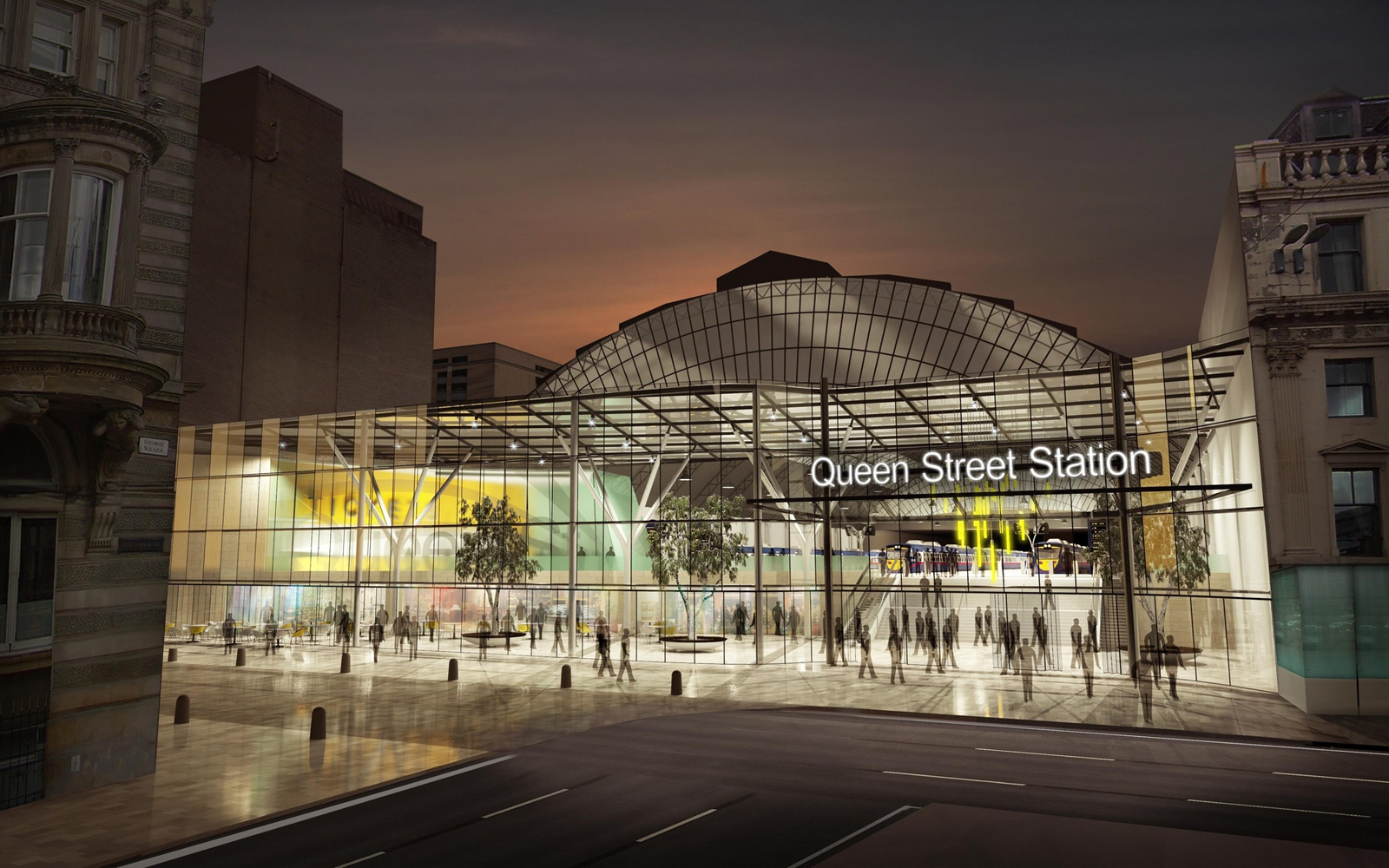
Cairnhill were awarded the contract of manufacturing and installing trackside, platform, and overhead steelwork at Glasgow Queen Street Station as part of the Edinburgh-Glasgow Improvement Project (EGIP). A key element of the works was the delivery of a new 26-tonne signal gantry during a 20-week station blockade.
Originally, the scope comprised of supplying small, wall-supporting brackets on either abutment, a central A-frame support, and two gantry sections. However, following the initial contract award, it became apparent that the original scope was not erectable due to various site constraints.
As a result of the existing abutment walls being oriented in three opposite plains, this required a full undertaking of a 3D survey of both abutments, which revealed misalignments that required a revised structural solution.
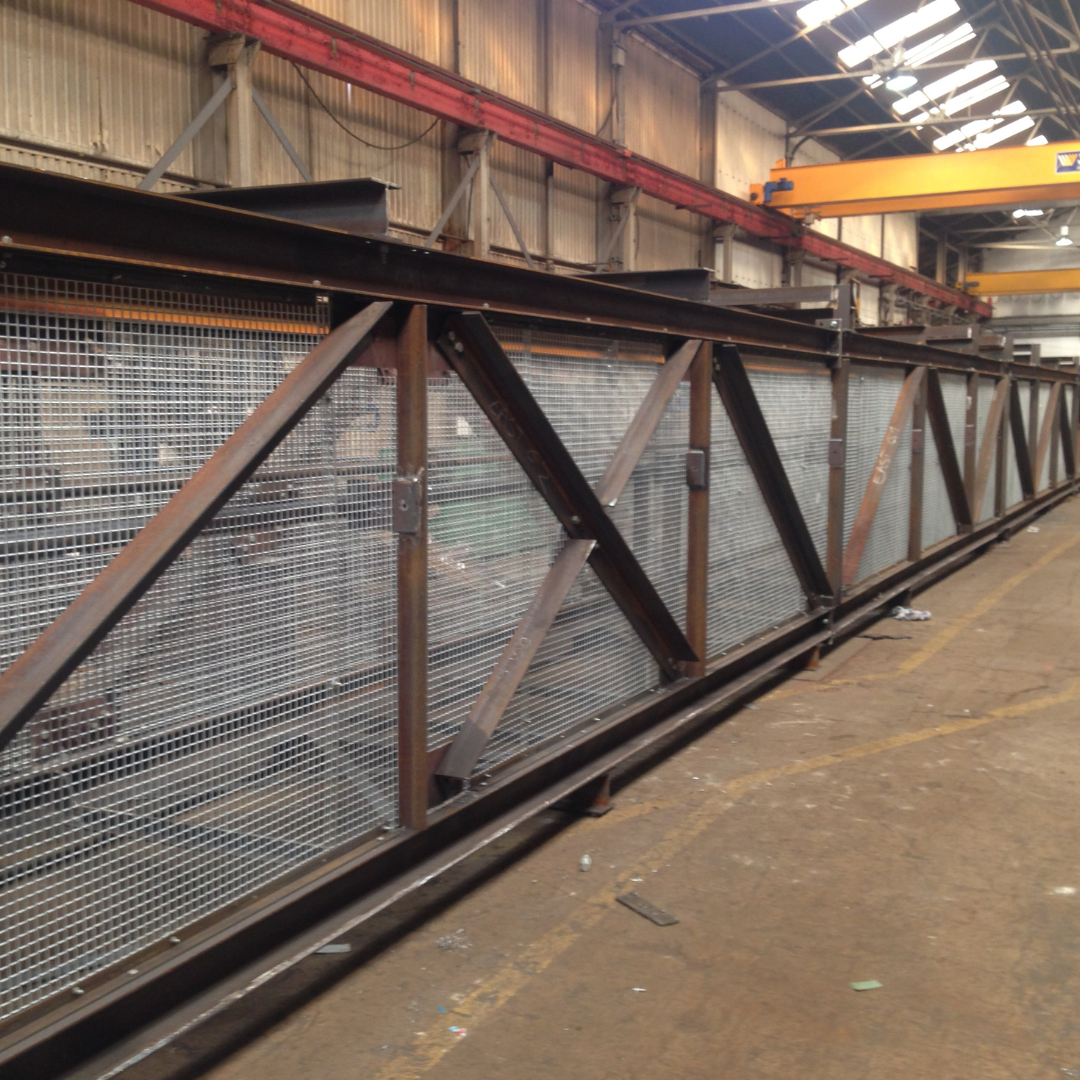
Working closely with Jacobs and Morgan Sindall, Cairnhill assisted in redesigning the gantry to accommodate the abutment structure, taking into account the abutment faces and the erectability of the final fabrication.
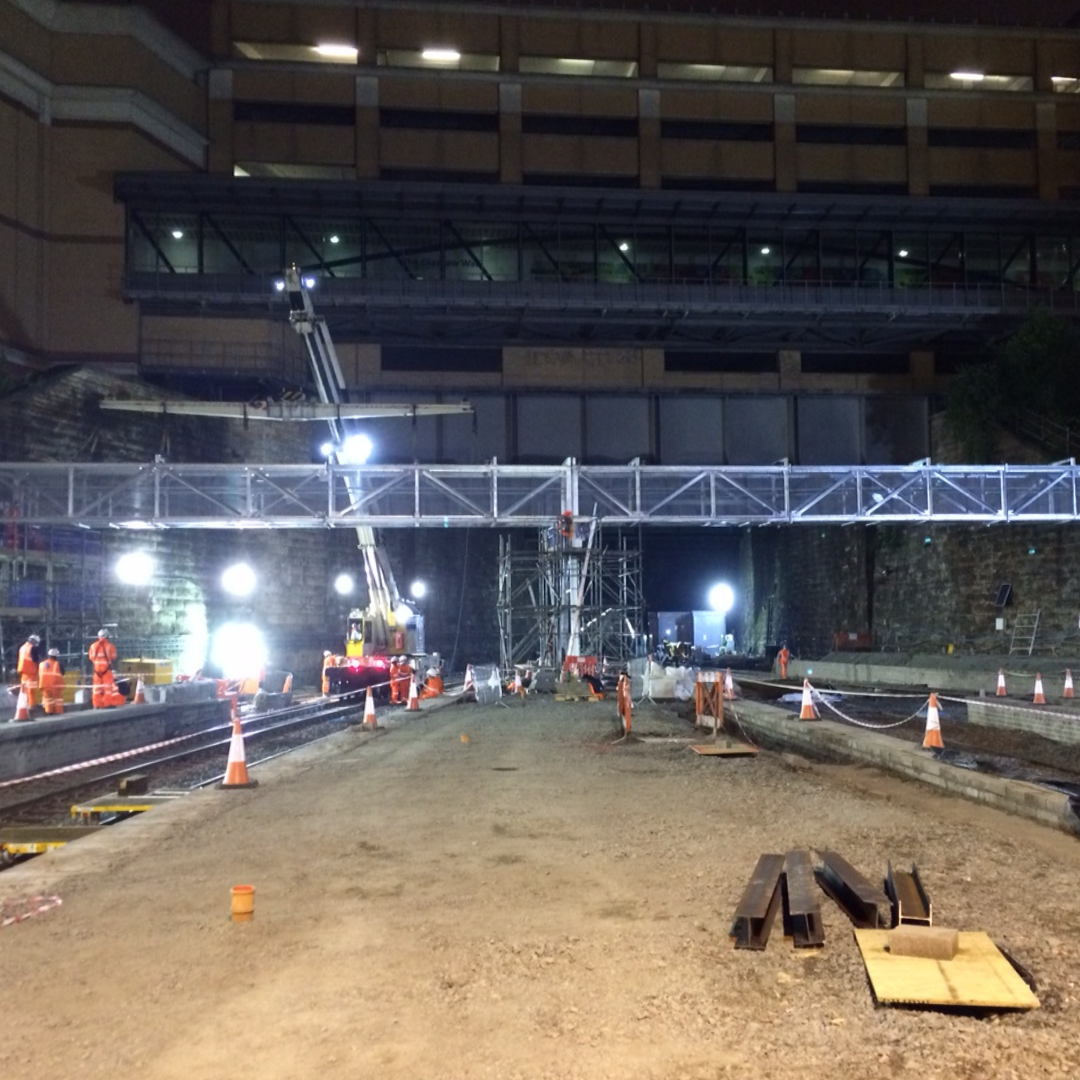
Due to crane access restrictions being over 60 metres away from the nearest crane laydown area, our team was unable to erect the structure in two sections, as this would have exceeded weight restrictions. Instead, Cairnhill agreed that the structure would be most erectable when fabricated in six sections, spliced on site to form two spans exceeding 25 metres in length.
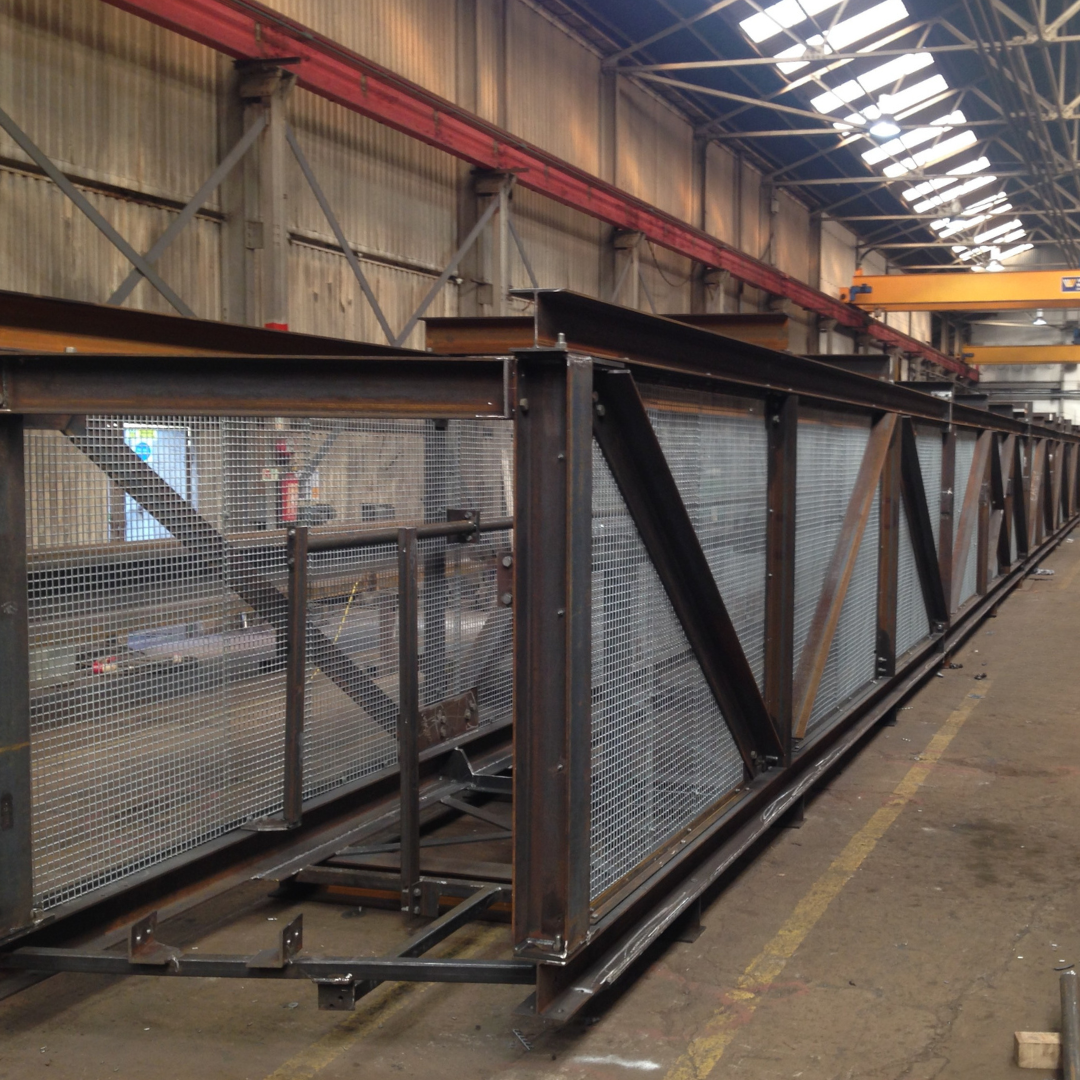
With each section being loaded from the Cathedral Street bridge using specialised road protection mats, as well as a low group pressure 360° telehandler, each section was transferred with specialised lifting equipment onto rail bogeys at track level before being moved into position.
As each section was loaded from an elevated height onto the rail bogies, Cairnhill operatives were required to move them to a predetermined track location directly in front of the Queen Street tunnel.
Once the first few sections were landed, the team completed all onsite splicing and ground-level fit-out of the gantry within a strict 12-hour timeframe.
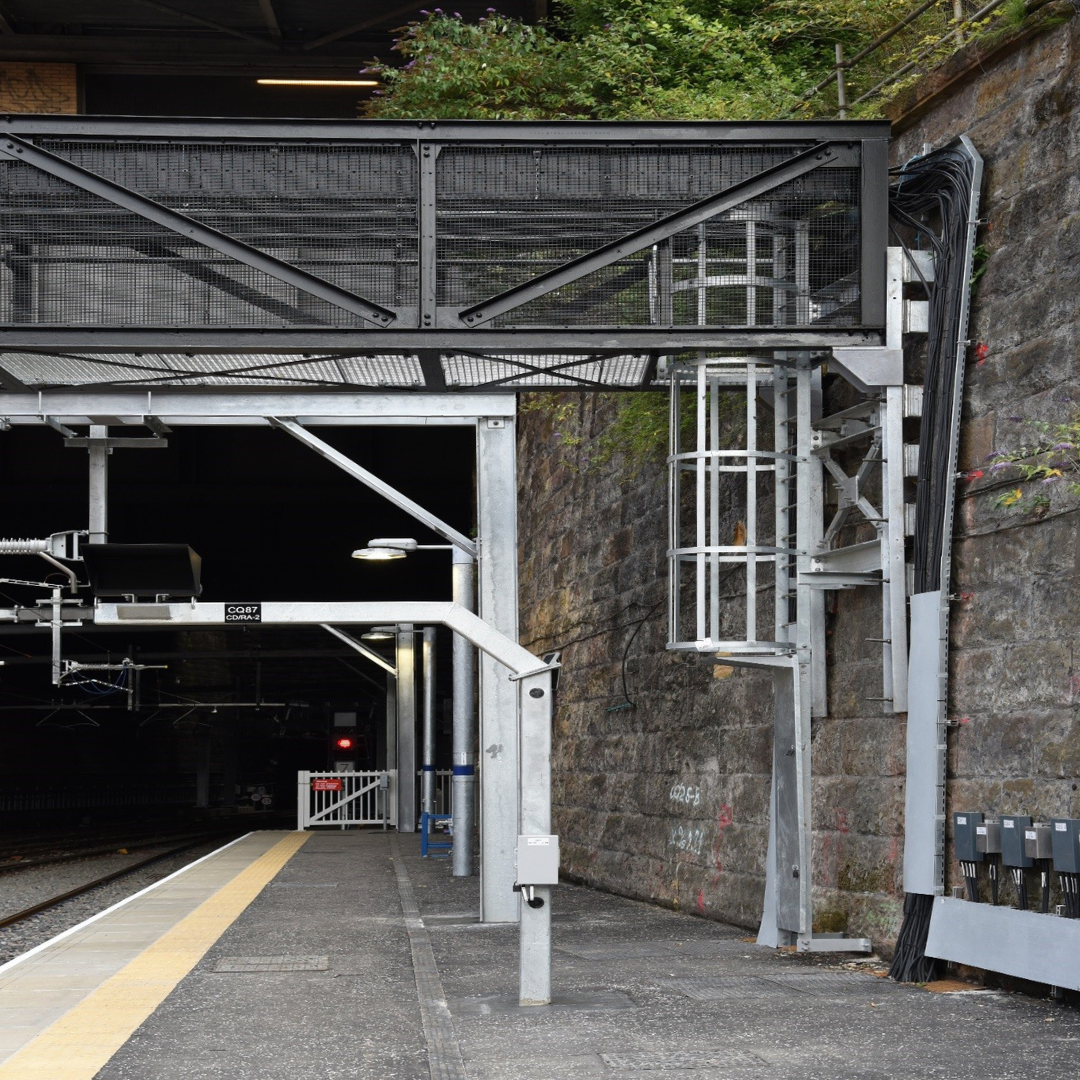
The abutment support frames presented a high level of complexity due to the geometry of the existing masonry abutment. Therefore, each 1500mm embedded rod was designed with an individually fabricated support bracket, designed to suit the precise geometry of the abutment.
To ensure accuracy, each fabrication was individually surveyed by our team to ensure full compliance with the drawing office requirements. Given the sensitivity of the geometry, a deviation of as little as 0.5° would have resulted in dimensional inaccuracies of approximately 50mm short or 70mm over in length.
Due to the strict timeframe of the contract, the signal gantry was erected using a Babcock Rail Kirow crane within a restricted 10-hour window. To reduce downtime during the installation phase, Cairnhill designed suitable temporary lifting beams to be compatible with the Kirow Cranes, significantly minimising overall slinging time required for each main gantry section.
The wall-mounted support brackets and central A-frame were installed in advance, with full as-built surveys completed of the three structures and verified against the trial erection completed within our workshop prior to galvanising.
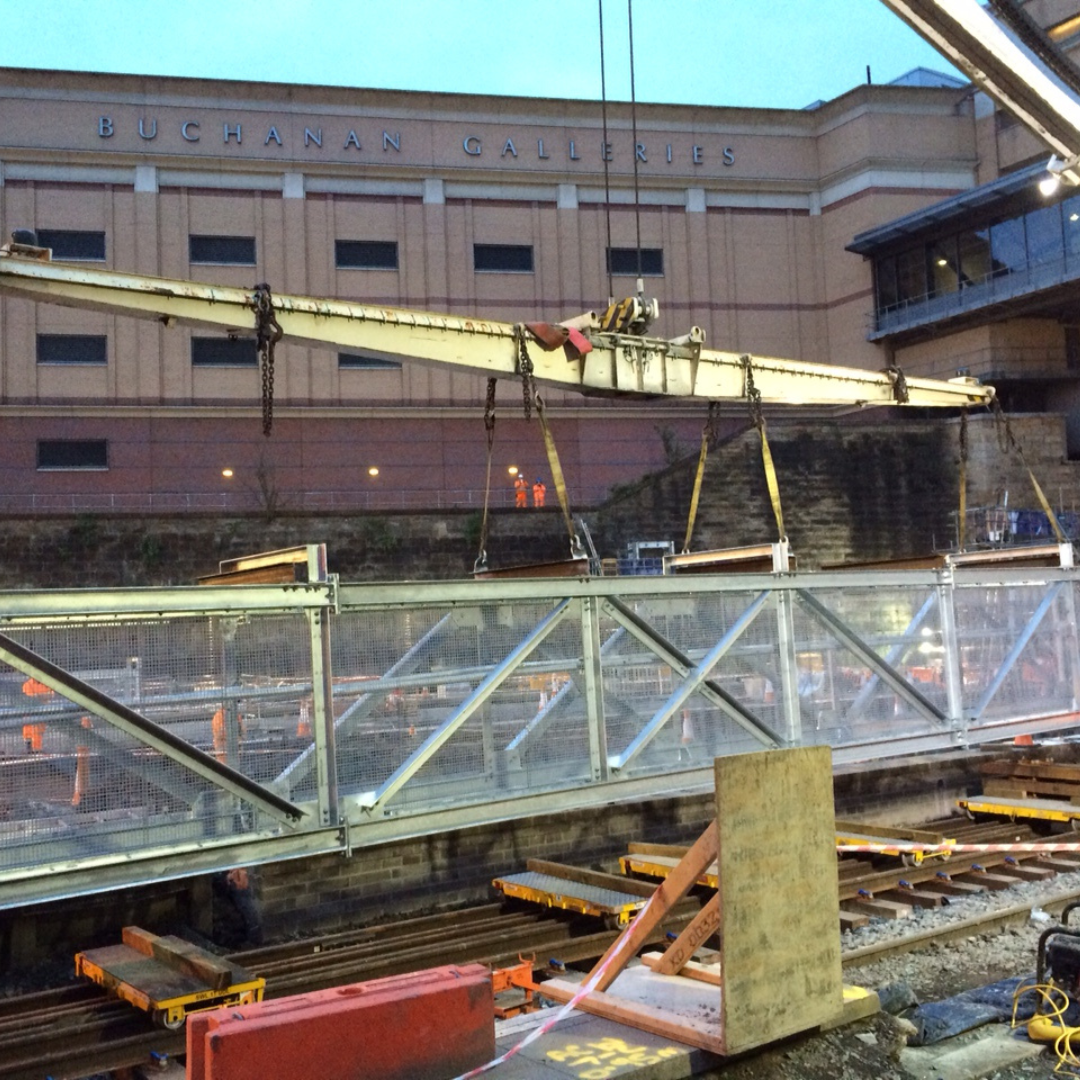
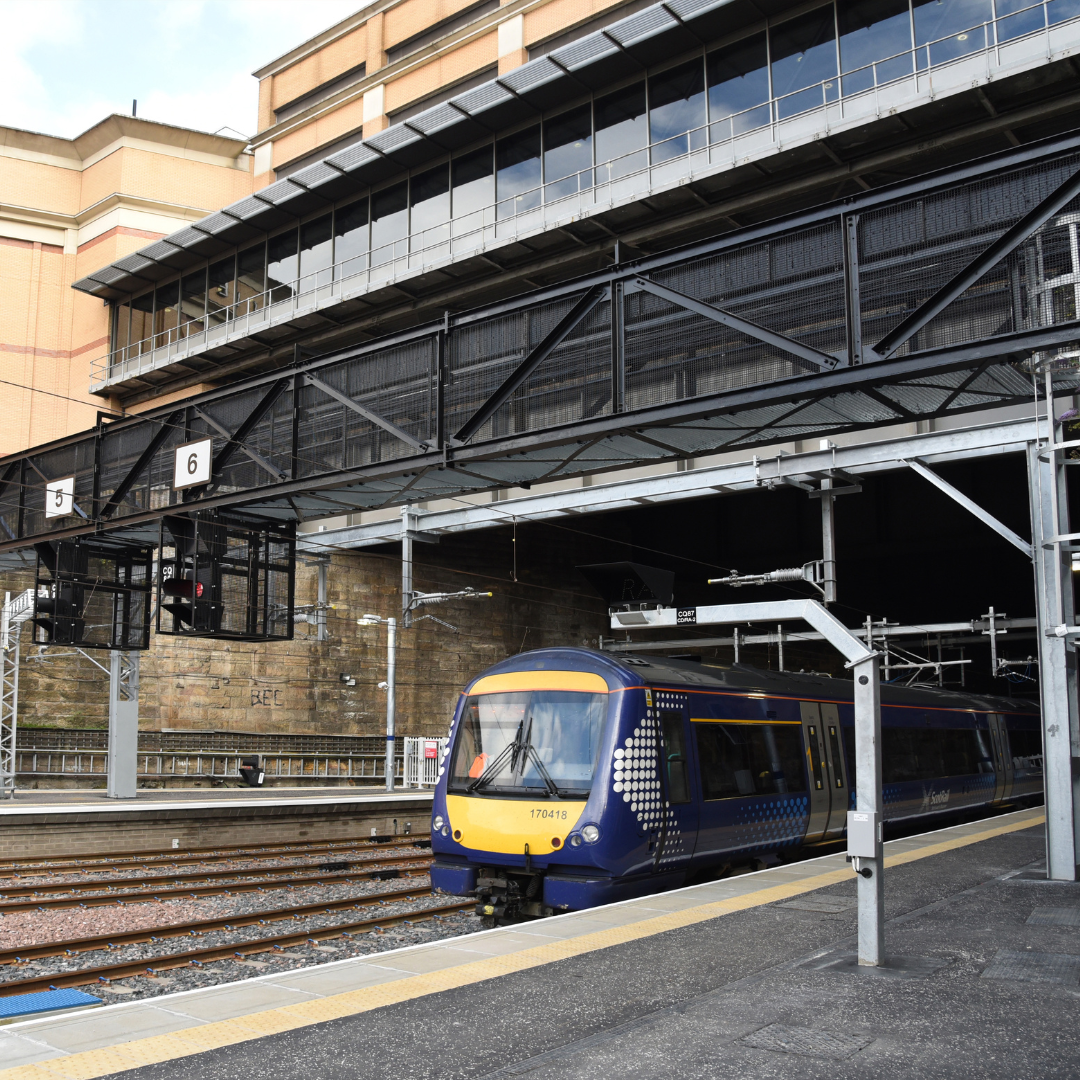
Given the minimal margin for error, the success of this project relied on close coordination between Cairnhill’s design, fabrication, and installation teams. The second span was successfully erected three hours ahead of schedule, demonstrating the effectiveness of the planning and execution strategy.
Cairnhill are privaliaged to have been asked to complete such a demanding structure, a testament to our team that will be working on future projects with both Morgan Sindall and Jacobs.
Central Quay Student Accommodation
View case study